Realness Has a Price Tag: The Hidden Cost of Being Yourself Online
Photo: Lu Zhi, CC0, via Wikimedia Commons
There's a version of the internet that sold us a beautiful lie: just be yourself, and the audience will come. No filters, no scripts, no corporate polish. Just you, a camera, and the courage to mean it. That pitch was compelling. It was also, as it turns out, a setup.
Because being genuinely yourself online — in a way that actually registers, that earns followers and brand deals and a sustainable living — costs a staggering amount. Money. Time. Psychological bandwidth. And the people who do it best have usually figured out that "authentic" is less a personality trait and more a production strategy.
Welcome to the authenticity tax. You didn't agree to pay it. But you're probably paying it anyway.
The Vulnerability-to-Revenue Pipeline
Let's start with what platforms actually reward. On TikTok, YouTube, and Instagram, the content that consistently breaks through the noise tends to carry an emotional charge. Confessions. Breakdowns. Honest admissions about money, mental health, relationships, failure. Audiences respond to it because it feels human in a feed that's otherwise relentlessly curated.
But here's the catch: producing that kind of content consistently, at the volume platforms demand, requires creators to either experience a genuinely unending stream of hard moments — or learn to perform vulnerability on a schedule. Neither option is free.
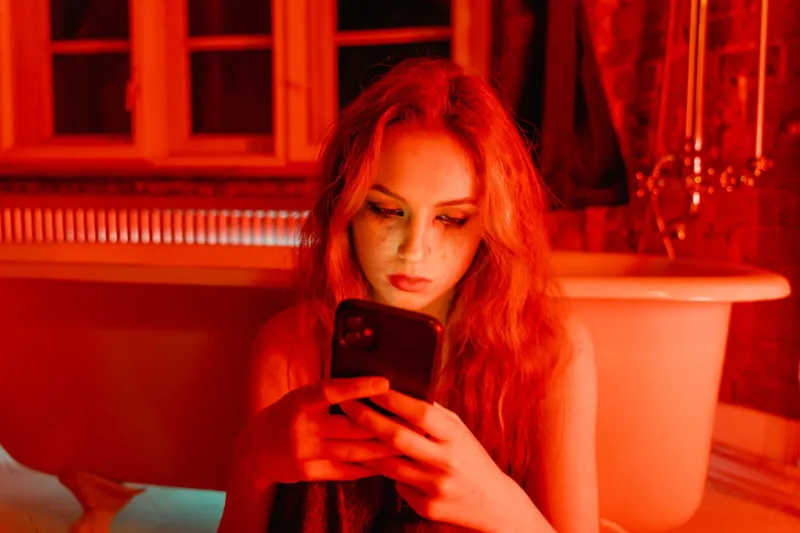
For creators who lean into real struggle, there are therapy bills. There are the sponsorships that quietly disappear because a brand doesn't want their logo adjacent to a tearful breakdown video. There's the burnout that comes from treating your worst days as content opportunities. One mid-size creator who built an audience around honest mental health storytelling described it bluntly in a 2023 interview: "I was literally scheduling my crises. Like, okay, I haven't posted anything heavy in two weeks, so I need to dig something up." That's not vulnerability. That's a content calendar.
Who Can Actually Afford to Be Real
This is where the authenticity conversation gets uncomfortable. Because the ability to share openly online — to post without a filter, to admit financial struggle, to talk about your therapy session or your difficult family — isn't equally available to everyone.
Creators from marginalized communities often face a brutal double bind. Audiences want their realness, their lived experience, their unvarnished perspective. But those same audiences (and the brands behind them) tend to reward that vulnerability with engagement rather than money. The parasocial relationship thrives. The bank account doesn't.
Meanwhile, creators with existing financial cushions — those who grew up comfortable, who have family safety nets, who built audiences in less fraught niches — can afford to perform authenticity without the same stakes. Their "raw" moments are genuinely lower-risk. They can go off-script because there's a script to return to.
The result is a strange inversion: the creators who have the most genuine, unperformed stories to tell are often the least equipped to monetize them safely. And the ones who do it most lucratively are frequently those who've figured out how to simulate rawness without actually bleeding.
The Strategy Behind the Mess
Spend any time studying the most successful "authentic" creators in the US right now and a pattern emerges. The lighting in their "unfiltered" videos is still pretty good. Their emotional disclosures tend to arrive at convenient narrative moments — before a product launch, after a controversy that needs managing, right when engagement has started to dip. The mess is real, but it's also managed.
This isn't cynicism. It's actually a necessary skill. Creators who've figured out how to be selectively transparent — sharing enough to feel human, holding back enough to stay functional — are doing something genuinely sophisticated. They're curating their own psychology in real time, deciding which parts of their inner life become public property and which stay protected.
The problem is that this skill is often invisible. Audiences consuming that content experience it as spontaneous. They don't see the calculation. And that invisibility is precisely what makes it valuable. The moment the strategy becomes obvious, the authenticity evaporates — and so does the engagement.
Platforms Profit. Creators Pay.
It's worth stepping back and asking who actually benefits from the authenticity economy. Because it isn't primarily the creators.
Platforms love vulnerable content. It drives session time, comments, shares, the kind of emotional investment that keeps users locked in. A creator having a genuine breakdown on camera is, from an algorithm's perspective, a high-performing asset. The platform captures that value through ad revenue. The creator captures some of it too — but also absorbs all of the psychological cost, the reputational risk, and the long-term toll of treating their inner life as inventory.
Brands benefit similarly. Authentic creators give them access to audiences who've lowered their defenses, who trust the person talking to them. That trust is enormously valuable for conversion. But brands also have the luxury of walking away the moment a creator's authenticity becomes inconvenient — too political, too messy, too real in the wrong direction.
The creator is left holding the bag. They've built an audience on openness, which means they can't easily pivot to something more protected. They're locked in.
What Faking It Actually Costs
Here's the other side of the equation, though: staying fake has its own price. Creators who maintain a relentlessly polished persona increasingly read as out of touch to younger US audiences who've grown up fluent in the language of performance. Gen Z in particular has developed a finely tuned detector for manufactured relatability, and they're not shy about calling it out.
So creators are caught between two expensive options. Go real, and pay the psychological and financial toll of genuine exposure. Stay polished, and pay the credibility tax of seeming fake in an era that's allergic to inauthenticity.
The middle path — strategic vulnerability, managed realness, curated mess — is probably the most sustainable. But it's also the most labor-intensive, and it requires a level of self-awareness that's genuinely hard to maintain when you're also trying to post three times a week and answer brand emails and manage a comment section full of people who feel like they know you.
The Unsettling Punchline
The most authentic thing you can say about authenticity online is that it's mostly not. Not because creators are liars, but because the platforms, the economics, and the audience expectations have collectively built a system where genuine self-expression is almost immediately commodified, optimized, and turned into a product.
The creators who navigate it best aren't the most honest ones. They're the ones who've made peace with the paradox — who've accepted that being real online means performing realness, and that the performance is part of the deal.
Which is either deeply cynical or kind of liberating, depending on how you look at it.
Either way, somebody's paying. And it's probably not the platform.