Nobody's Watching, and That's the Point: How TV Stopped Competing for Your Eyes
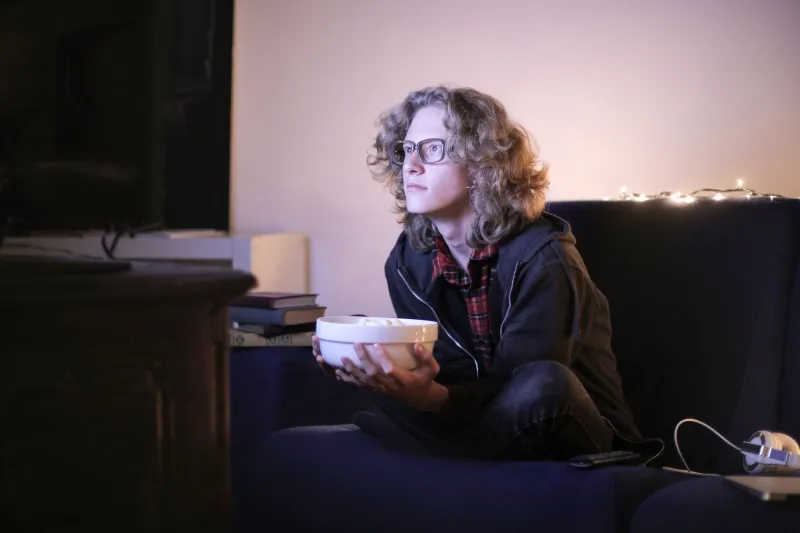
There's a phrase that shows up in every streaming press release and every trend piece this time of year: ambient TV. The idea is warm and slightly scented-candle. Television as a companion. A glowing rectangle that keeps you company while you fold laundry, answer Slack messages, and half-listen to someone explain the multiverse.
It sounds nice. It is not nice. It's a compromise dressed up as a lifestyle, and everyone involved knows it.
The Word 'Ambient' Is Doing a Lot of Work
Strip the marketing away and ambient TV describes a very specific arrangement: platforms want hours logged, audiences want to stop making decisions, and both sides agree to pretend that a show playing in the background counts as watching it.
That's not a golden age. That's a ceasefire. The viewer gets out of committing to a story. The platform gets a completion metric that looks like devotion. Nobody has to admit the obvious — that a huge share of what gets streamed is being absorbed by a room, not a person.
The tell is in how defensive the praise has gotten. Nobody says, 'This show rewards your full attention.' They say, 'It's perfect to have on.' That's a different review entirely.
Built for the Glance
Watch the first four minutes of a modern streaming drama and you can feel the design intent. Characters restate their own motivations. The score tells you who to distrust before anyone speaks. Recaps have swollen into short films because the assumption is that you missed the last three episodes — or that you had them on while doing something else.
That isn't laziness from writers. It's engineering. If a meaningful chunk of the audience is looking down at a phone, dialogue has to carry information the visuals used to handle alone. Ambiguity becomes a liability. A silent, slow-burn scene is a scene where people pick up their phones and don't come back.
So we get shows that are efficient, legible, and weirdly frictionless — the televisual equivalent of a hotel lobby playlist. Pleasing. Impossible to recall a week later.
What Half-Watching Does to a Story
Here's the uncomfortable part: it works. Not on the level of art, but on the level of habit, which is what the business actually runs on.
A show built for the second screen can survive being ignored, and that makes it easier to keep on the schedule. It also means the moments that once made television feel like an event — the long wordless sequence, the season that trusts you to keep up — get quietly priced out. You can't build a cliffhanger for someone who's washing dishes.
And the audience adapts in turn. Try watching a dense, deliberately paced series after a year of background viewing and notice how fast your hand reaches for your phone. The tolerance for being bored has atrophied. That's not a moral failing; it's just what practice does. We've practiced not looking.
Forgettable Is Now a Feature
Somewhere along the way, 'forgettable' stopped being an insult and became a use case. A show you can drift in and out of is a show that never asks anything of you — and in a world where everything else is asking, that's genuinely appealing.
But be clear about the trade. When a platform optimizes for hours-on, the winner is rarely the strangest, sharpest thing in the room. It's the thing that's pleasant to have on. Weird, thorny, arguable television doesn't get greenlit on the strength of being ignorable. It gets greenlit because someone once watched it with their whole face.
Who's Actually Being Served
Nobody is the villain here. Viewers are tired. The last few years have wrung out a lot of people, and the idea of collapsing into a couch with something that doesn't demand anything is a real comfort, not a character flaw.
But comfort and quality aren't the same purchase, and it's worth refusing the framing that treats them as identical. Ambient TV isn't television growing up. It's television meeting us where we are — scattered, distracted, phone in hand, three tabs open — and deciding that's good enough.
The better question isn't whether background viewing is ruining television. It's whether we still want anything that requires us to look up. If the answer is yes, the shows have to exist. And that means someone, somewhere, has to be willing to bet on a viewer who's actually sitting still.