Rough Around the Edges, Smooth on the Markup: The Hustle Behind 'Ugly' Premium Products
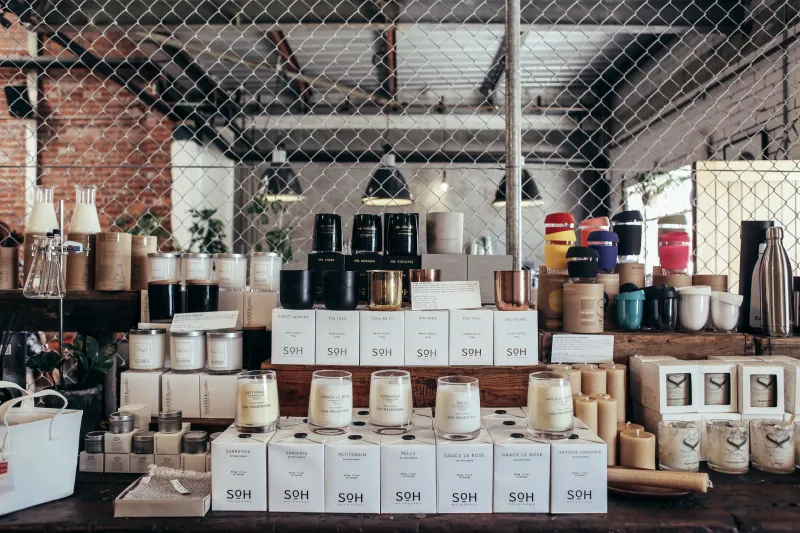
There's a candle sitting on a shelf at a boutique in Brooklyn — and probably one in Austin, Portland, and whatever neighborhood in your city just got its third cold brew bar. The label is plain kraft paper. The font looks like someone typed it on a 1987 typewriter and called it a day. There's maybe a smudge on the wax, intentional or not, it's hard to say. It costs $48.
Two feet away, there's a candle with a glossy label, a pleasant floral illustration, and a gold foil logo. It smells roughly the same. It costs $14.
Guess which one sells out faster.
This is the authenticity tax in action — the quiet premium that gets baked into products specifically because they appear unfinished, unpolished, and unbothered. And the more you look for it, the more you see it everywhere.
The Aesthetic of 'I Didn't Even Try'
The playbook here isn't complicated, even if it took marketers an embarrassingly long time to crack it. Somewhere in the mid-2010s, brands started noticing that overly designed packaging felt corporate, and corporate felt fake, and fake felt like the worst thing you could possibly be to a certain generation of consumers.
So they went the other direction. Hard.
Skincare brands started shipping products in amber glass bottles with nothing but a small stamped label. Coffee roasters ditched their colorful bags for matte black with a single line of text. Clothing labels leaned into visible stitching, raw hems, and washes that made new denim look like it had already survived a decade of hard living. Even food brands got in on it — 'ugly' produce boxes, 'imperfect' crackers, granola sold in what appears to be a repurposed paper lunch bag.
The message being sent, whether spoken out loud or not: we don't need to try, because we're the real thing.
The price tag, though? That part is very much trying.
Who's Actually Buying This
It would be easy — and a little lazy — to just point at Gen Z and say they're the ones getting played. The reality is messier and more interesting than that.
Younger consumers, particularly those who came of age watching influencer culture get exposed as one long paid advertisement, genuinely distrust polish. They've been burned by brands that mastered the language of authenticity while delivering the same mass-produced product underneath. So when something looks like it came from a small batch, a local maker, a person rather than a factory — there's a real emotional pull toward it, even when the origin story is completely manufactured.
But here's where it splits. A significant chunk of Gen Z consumers — especially those who grew up with less disposable income and learned early to read a price tag — are deeply skeptical of this whole performance. Spend any time on TikTok's consumer commentary side and you'll find creators methodically dismantling 'artisan' brands, tracing the supply chain back to the same overseas manufacturers used by the glossy competitors, pointing out that the distressed label is printed on an industrial press just like every other label.
They see the authenticity tax for what it is. And they are not quiet about it.
So who's actually paying the premium? Often it's older millennials with disposable income who want to feel like they're supporting something real. Or younger consumers who can afford to buy into the story as a form of self-expression, a way of signaling values through purchasing. The product almost becomes secondary to what owning it communicates.
The Craft Beer Precedent
None of this is new, exactly. The craft beer industry pioneered this model so effectively it became a case study in business schools. Small breweries charged significantly more per six-pack than the big domestic brands, partly because of actual production differences, but also because the idea of small-batch, locally-made, slightly weird beer was worth money to a specific consumer.
Then the big beer companies bought up those craft breweries and kept the labels exactly the same. Same fonts, same origin stories, same 'brewed in small batches' language on the can. The authenticity was now owned by a multinational corporation and most casual drinkers never noticed.
The unpolished aesthetic market is following the same arc. Independent brands that genuinely started with kraft paper labels because they couldn't afford anything else are now competing against major consumer goods companies that hired agencies to replicate that exact energy. The 'imperfect' look has been industrialized. The raw aesthetic has been refined into a formula.
When the Flaw Is the Feature
What makes this particularly strange is the deliberate introduction of imperfection as a value-add. Not just minimalism — actual flaws, presented as proof of humanity.
Ceramics with visible thumb marks. Notebooks with slightly uneven edges. T-shirts where the screen print is intentionally off-center by a quarter inch. Bread sold specifically because it's 'ugly' — misshapen, asymmetrical, nothing like the uniform loaves at the supermarket.
And consumers pay more for all of it. The imperfection is the premium.
There's a genuinely interesting psychology underneath this. Imperfection implies a human hand. A human hand implies care. Care implies quality. It's a chain of associations that brands have learned to trigger deliberately, even when the 'human hand' is a machine calibrated to produce a consistent level of inconsistency.
Yes, that's a real thing. Controlled randomness, engineered to feel accidental.
The Rejection Is Getting Louder
The backlash, when it comes, tends to be swift and specific. Consumers who feel like they've been sold a story that doesn't hold up don't just quietly stop buying — they make content about it. The 'exposé' format thrives on exactly this kind of reveal: here's the brand that charges $60 for a 'handmade' item, here's the Alibaba listing for the same item at $4.50, here's the side-by-side.
This creates a weird feedback loop where the authenticity aesthetic keeps working as a marketing strategy even as its mechanisms get publicly dissected. Enough consumers are either not seeing the takedowns or simply don't care — the story still sells, even when the story is known to be constructed.
Which might be the most honest thing about the whole situation. We've always known advertising tells stories. The authenticity era just convinced a lot of people that this particular story was different.
It wasn't. It just came in a matte paper bag.
So What Are You Actually Buying
None of this means every minimalist, imperfect, 'ugly' product is a cynical cash grab. Some of them genuinely are small operations, genuinely do have different sourcing, genuinely do reflect a maker's actual aesthetic sensibility rather than a marketing team's reverse-engineered version of one.
The hard part is that the visual language is now identical. The real thing and the performance of the real thing look the same on a shelf and on a phone screen. The authenticity tax gets paid whether the authenticity is real or not.
Maybe the most useful lens here isn't cynicism or credulity — it's curiosity. Ask where something actually comes from. Read past the label copy. And if you still want the $48 candle after all that, at least you're buying it with your eyes open.
That, ironically, might be the most authentic transaction of all.