Grandma's Hobby, Gen Z's Flex: The Analog Revival Nobody Saw Coming
Somewhere between the third consecutive hour of doomscrolling and the fourth notification from an app you forgot you downloaded, something cracked. People started reaching for things with texture. Things that required patience. Things that, crucially, could not be completed by double-tapping a screen.
And suddenly — almost absurdly — the hobbies your grandmother practiced in near-total cultural obscurity are everywhere. Macramé wall hangings dangle from the apartments of twenty-six-year-olds in Brooklyn and Austin. Fountain pen enthusiasts are filling Reddit threads with ink swatch comparisons. Bookbinding workshops in Portland and Chicago have waitlists. The crafts that once felt like relics of a pre-digital world are being treated like rare sneakers: coveted, photographed, and yes, occasionally flexed.
The question worth sitting with is whether any of this is real — or whether it's just another aesthetic the algorithm swallowed whole.
The Slow Living Paradox
Here's the irony that nobody seems to want to acknowledge out loud: the "slow living" movement, which champions handmade goods, analog processes, and deliberate pacing, is being consumed at digital speed. A TikTok video of someone hand-stitching a leather journal gets 2.4 million views. An Instagram reel of a woman hand-dyeing yarn in a sun-drenched kitchen racks up saves faster than most brand campaigns. The aesthetic of slowness is being distributed through the fastest, most frictionless media infrastructure ever built.
That tension isn't a bug. It's kind of the whole point.
For a generation that grew up with smartphones in their hands and anxiety in their chests, watching someone do something painstakingly slow and tactile functions almost like ASMR for the existential dread. It's soothing precisely because it's the opposite of everything else. The craft itself isn't always the draw — the vibe of the craft is. And vibes, as we've established, are extremely monetizable.
From Niche to Niche-Chic
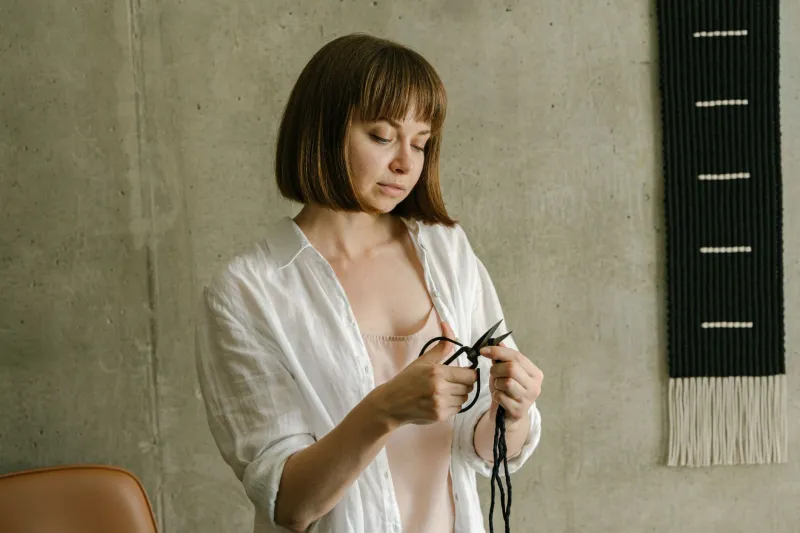
Let's talk about macramé for a second, because it's maybe the clearest case study in how this transformation actually works. Macramé peaked in the 1970s, fell off completely, and spent roughly four decades as the thing your aunt had on her wall and never quite got rid of. Then, around 2018 and accelerating hard through the pandemic years, it came roaring back — not as nostalgia exactly, but as something newly coded as artisanal and intentional.
Etsy sellers who'd been quietly knotting rope for years suddenly found themselves with order backlogs stretching months out. Instructors who taught community center classes started launching online courses at $150 a pop. Brands like Urban Outfitters and Anthropologie began stocking macramé pieces with price tags that would have seemed insane for what is, technically, knotted rope. The craft didn't change. The cultural framing around it did, completely.
Fountain pen collecting followed a similar arc, though its community is older and considerably more intense. What was once the territory of serious hobbyists — people who could spend forty-five minutes discussing the merits of a particular nib grind — is now attracting younger collectors who discovered the hobby through YouTube reviews and Reddit rabbit holes. Pen brands like TWSBI and Pilot have seen surging interest from buyers under thirty-five, a demographic they'd essentially written off. Ink colors with names like "Sailor Yama-dori" and "Diamine Oxblood" are being discussed with the same reverence people used to reserve for limited-edition sneaker colorways.
Bookbinding is perhaps the most niche of the bunch, and therefore maybe the most telling. It requires actual tools, genuine skill, and a willingness to ruin several attempts before producing something passable. And yet, bookbinding tutorials on YouTube pull hundreds of thousands of views. There are TikTok accounts dedicated entirely to the process — stitching signatures, pressing boards, pasting endpapers — that have built communities of followers who will never try it themselves but find watching it deeply satisfying.
The Authenticity Tax
Here's where things get a little uncomfortable. The moment a niche hobby gets enough cultural oxygen, the economy shows up. And when the economy shows up, the thing that made the hobby feel meaningful in the first place starts to quietly erode.
The "slow living" aesthetic has become a fully functional content vertical, complete with sponsorships, affiliate links, and brand deals. That woman hand-dyeing yarn in her sun-drenched kitchen? She's probably tagging a natural dye supplier. The fountain pen reviewer with the softly lit desk setup? There's a good chance that notebook was gifted for consideration. This isn't inherently sinister — creators deserve to get paid — but it does create a strange loop where the rejection of consumer culture becomes, itself, a consumer product.
What's being sold isn't just the macramé kit or the starter fountain pen. It's the identity of being someone who does macramé, who uses fountain pens. The hobby as personality marker. And that's a very different thing from the quiet, private satisfaction that originally made these crafts appealing to the people who practiced them before anyone was watching.
So Is It Real, Though?
Honestly? Probably both things are true at once, which is the least satisfying answer and also the most accurate one.
For a meaningful subset of people who've picked up these hobbies over the last few years, the engagement is genuine. The pandemic gave people time and existential motivation to actually try something with their hands, and some of those people discovered that they loved it — not for the content, but for the thing itself. Craft communities, both online and in person, have grown in ways that feel substantive. Local yarn shops that were struggling a decade ago have found new audiences. Bookbinding guilds that operated in near-total obscurity have doubled their membership.
At the same time, plenty of people bought the loom, filmed two videos, and moved on when the algorithm stopped rewarding the content. The macramé supplies gathered dust. The fountain pen dried out from disuse. The hobby was never really the point — the aesthetic of the hobby was, and aesthetics have notoriously short shelf lives online.
The more interesting question isn't whether the trend is "authentic" — that's probably the wrong frame entirely. It's what happens to these crafts after the trend cycle moves on. History suggests that each wave of mainstream interest leaves a small but committed residue of genuine practitioners behind. The 1970s macramé boom produced crafters who kept at it for fifty years. The current wave will probably do the same for at least a few people.
The Unexpected Winners
If there's a genuinely heartening subplot in all of this, it's the older practitioners who've been doing these things quietly for decades and are suddenly, unexpectedly, finding an audience. The seventy-year-old bookbinder who's been teaching out of her garage and now has a YouTube channel with eighty thousand subscribers. The fountain pen collector who spent years posting on forums with a few hundred readers and now gets interview requests. The macramé artist who sold pieces at craft fairs for twenty years before an Etsy algorithm bump changed her entire financial picture.
The trend cycle, for all its shallowness, occasionally deposits real value in unexpected places. And there's something genuinely strange and kind of wonderful about a generation raised on infinite digital content deciding that the most interesting thing they could do is learn to tie knots.
Grandma, it turns out, was ahead of the curve. She just didn't have the right lighting.